

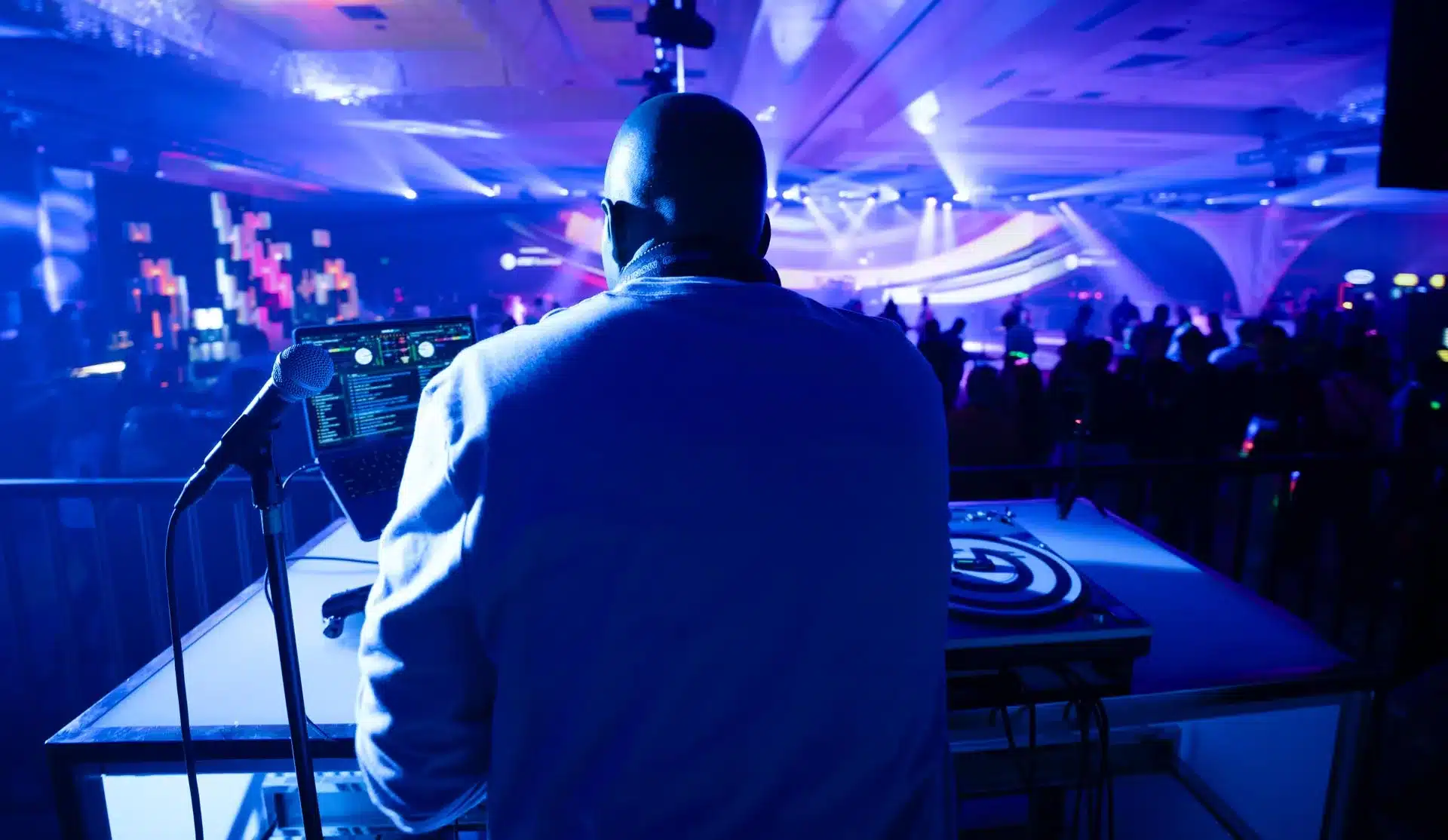

DJ Graffiti: Nationwide Corporate Event DJ Services & Expert Entertainment for Dallas Convention Centers & Major Venues

DJ Graffiti provides premier corporate event DJ services, delivering curated live entertainment, technical production, and schedule-driven performance for large-scale gatherings at convention centers and major venues . With a strong focus on Dallas, TX, DJ Graffiti combines event consultation, music curation, and real-time performance to shape attendee experience, manage energy flow, and support branding moments across receptions, networking breaks, and awards segments. Planners seeking corporate event entertainment, whether in Dallas or across the country, need partners who understand venue logistics, AV integration, and hybrid streaming considerations so sound, lighting, and transitions align with production timelines and attendee expectations. This article explains how DJ Graffiti’s specialized corporate DJs work at convention centers, what to vet when hiring, typical cost drivers and package structures, real-world case study outcomes, and technical requirements for hybrid events and large halls. Throughout, readers will find checklists, equipment comparisons, and actionable steps for hiring a professional event DJ, emphasizing best practices for maximizing attendee engagement and minimizing production risk.
Why DJ Graffiti is the Premier Choice for Corporate Event DJs in Dallas & Nationwide
A premier corporate event DJ service, like DJ Graffiti, delivers a consultative planning process, tailored music curation, reliable production equipment, and measurable improvements in attendee engagement for events . These elements work together because consultative discovery informs playlist strategy, technical setup ensures consistent sound across large rooms, and on-site performance ties music to event timing to preserve professional tone and brand alignment. For event planners searching for corporate event entertainment in Dallas, or coordinating events across the nation, the ability to coordinate with venue AV teams and adapt to schedule changes is the key differentiator that drives a smooth attendee experience. The following list highlights core differentiators planners should prioritize when selecting a corporate DJ for convention centers and major venues, .
DJ Graffiti differentiates itself through a transparent consultative approach, customized playlists aligned with event goals, and high-quality sound and lighting tailored for large venues . Their primary services include event consultation, music curation, live DJ performance, and integration with event schedules to ensure timing and transitions match production cues. Planners evaluating vendors should check availability early in the process to secure a DJ with extensive convention-center experience, .
DJ Graffiti stands out for these primary reasons:
- Consultative Planning: A discovery-driven process that aligns music strategy to event objectives and schedule.
- Customized Music Curation: Playlists and live sets designed to support brand tone, networking flow, and program pacing.
- Production-Grade Equipment: Sound and lighting packages built for convention-scale rooms with redundancy and AV coordination.
- Proven Venue Experience: Expertise working with major venues and production teams nationwide, including extensive experience in Dallas, to manage load-in, cues, and transitions.
These differentiators guide vendors toward consistent, brand-safe entertainment. Understanding how music is customized next helps planners anticipate the DJ’s role in producing cohesive event moments.
How Does DJ Graffiti Customize Music for Corporate Events?

Music customization begins with a focused discovery session in which the DJ asks about event goals, audience demographics, brand personality, and critical program moments, and then maps those inputs to a playlist and live-flow plan. The mechanism here is simple: discovery informs curation, which informs transitions and live-floor adjustments that maintain energy where needed and quiet it for speeches or awards. This process yields tangible benefits such as seamless transitions, appropriate tempo control during networking, and music that reinforces brand moments without overpowering them. In practice, DJ Graffiti translates a client brief into a music brief that segments the event into phases—arrival, networking, program, and after-party—each with tempo, instrumentation, and volume guidelines.
During on-site performance the DJ uses the music brief and crowd feedback to make live adaptations, such as shifting from ambient lounge tracks to more rhythmic selections when attendee energy rises. This stepwise method—discovery, curation, rehearsal, and live adaptation—ensures music supports event objectives while allowing room for spontaneous engagement when programmed activities run ahead or behind schedule. Clear communication of these phases during planning reduces last-minute friction with production teams and venue staff.
What Production-Grade Equipment & Technology Does DJ Graffiti Use for Corporate Events Nationwide?

In large-scale venues , equipment selection and redundancy form the backbone of reliable entertainment delivery; DJ Graffiti’s professional sound, lighting, and backup systems prevent common failure modes and maintain consistent audio coverage across ballrooms and exhibit halls. The core mechanism is compatibility: production-grade PA systems and lighting rigs that integrate with venue AV trunks and stage power deliver predictable SPL, coverage, and visual impact. The benefit is clear—consistent, intelligible sound in any convention setting, including Dallas’s premier venues, improves speech clarity, preserves musical dynamics, and supports hybrid streaming feeds without overload or dropouts.
Below is a concise equipment overview that clarifies role and event benefit.
The primary equipment choices and their event benefits are listed below.
This equipment set supports integration with venue AV teams and hybrid streaming, reducing technical risk and improving perceived production value. Coordinating these elements with the venue’s production staff is the next critical step when hiring a DJ for a convention center event.
How to Hire DJ Graffiti: The Best Corporate Event DJ for Your Convention Center Event in Dallas or Nationwide
Hiring the right corporate event DJ, especially for major convention centers in Dallas or across the country, requires a structured timeline, rigorous vetting criteria, and clear contract terms to protect production timelines and brand expectations. The mechanism that ensures a strong vendor fit is process discipline: early booking preserves options, careful technical vetting reduces day-of surprises, and contract clarity secures scope, set times, and contingency plans. The benefit to planners is reduced risk and a DJ who can integrate seamlessly with stage management, AV technicians, and streaming producers, . Below is a practical, snippet-friendly checklist that planners can use to secure a professional event DJ for a convention-center booking.
- Book early: Secure talent 6–12 months before large convention-center events to lock availability and allow time for technical planning.
- Review rider and equipment: Confirm technical rider, line checks, and compatibility with venue power and stage dimensions at your specific event location.
- Request references and samples: Ask for examples of similar convention or major-venue events and production coordination anecdotes.
- Confirm insurance and backup plans: Verify insurance certificates and documented redundancy for critical systems.
- Finalize contract details: Define load-in/out windows, set durations, overtime rates, cancellation terms, and coordination points with production, including any travel or logistics specific to your venue.
These steps reduce scheduling surprises and ensure the DJ can meet venue requirements. The next area to prioritize is the booking timeline and how it varies by event complexity.
As part of the hiring process, DJ Graffiti offers a consultative booking workflow that aligns discovery, technical planning, and on-site coordination to venue schedules, . Their approach typically includes a discovery call, a written music brief, coordination with venue production, and a pre-event run-through to confirm cues and broadcast feeds. Planners evaluating vendors should check availability early and confirm that the DJ has extensive experience with convention-center load-in/out processes and hybrid event routing, .
When Should You Book DJ Graffiti for Your Corporate Event in Dallas or Nationwide?
Booking timelines depend on event scale and seasonality; larger convention-center events, , require earlier commitments because vendor availability and production slots fill quickly. For major venues and multi-day conferences, , secure entertainment and production partners 6–12 months out to allow for stage scheduling, AV planning, and contract approvals. The reason this window matters is that larger events often involve coordinated logistics—freight elevators, union labor, and multi-vendor run-of-show sequencing—that need lead time to resolve, .
Smaller corporate gatherings can often be booked 3–6 months in advance, but peak conference seasons may still compress availability. Early booking also benefits planners by allowing thorough music discovery, tailoring of playlists for branding purposes, and pre-event technical checks that prevent last-minute scope creep. Allocating time for these activities ensures the DJ can deliver polished transitions and synchronized cues without compromising the program flow.
What Should Event Planners Look for in a Professional Corporate Event DJ (Dallas & Nationwide)?
Event planners should evaluate vendors on experience, technical documentation, contingency planning, and clear communication rather than price alone, . Key vetting items include a technical rider, insurance documentation, references from similar venue types , sample live mixes, and transparency about equipment included versus add-on items. The mechanism is risk mitigation: each vetting item reduces a specific production risk such as power compatibility issues, licensing misunderstandings, or insufficient coverage for large rooms, .
Below is a concise checklist of qualifications and red flags to guide evaluation:
- Venue experience: Proof of work at convention centers or major venues nationwide, with specific expertise in Dallas.
- Technical rider: Clear list of equipment, power, and staging requirements.
- Insurance: General liability coverage and willingness to work with venue insurance terms.
- References: Recent clients with similar event scales and objectives.
- Backup plan: Documented redundancy for playback, power, and microphone systems.
Planners who use this checklist will find it easier to align production expectations and avoid scope gaps that emerge during load-in. Having vetted the DJ and secured a booking, the next common concern is how pricing typically works for convention-center DJ services.
What Are the Costs & Pricing Options for DJ Graffiti’s Corporate Event DJ Services (Dallas & Nationwide)?
Pricing for DJ Graffiti’s corporate event DJ services is driven by event length, venue complexity, equipment needs, lighting and production requirements, and whether MC or hybrid streaming services are included, . The mechanism behind cost variance is additive: each production element (additional speakers, lighting, broadcast feeds, extended hours, ) increases resource needs and coordination time. Planners benefit from understanding which components are bundled and which are considered add-ons so quotes can be compared on an apples-to-apples basis. Below is a comparative table that helps planners interpret common package tiers and what is typically included versus billed separately, .
This table compares typical package structures and clarifies common inclusions and customization notes.
How Do Pricing Packages Vary for DJ Graffiti’s Services at Major Venues (Dallas & Nationwide)?
DJ Graffiti’s package tiers typically align with event scale: basic tiers suit breakout-room receptions or small gatherings, standard tiers fit mid-size ballroom events, and premium tiers support large plenaries, trade-show activations, or hybrid broadcasts requiring dedicated audio feeds and multitrack routing, . The mechanism is resource scaling—larger rooms and hybrid streaming need additional speakers, mixers, and technical staffing which raise costs, . Planners should match package scope to program needs to avoid overpaying for unnecessary production while still guaranteeing quality in large spaces.
When comparing vendors, request a clear breakdown of setup time, number of tech personnel, lighting scope, and any content licensing or venue fees that may be passed through. Transparent proposals prevent surprise charges and help align budget expectations with production quality.
Are There Additional Fees for Equipment or Custom Playlists?
Additional fees commonly arise for travel and parking, , extended load-in/out windows, union labor requirements at certain venues, special lighting or stage builds, and bespoke music licensing for custom-produced tracks. These surcharges occur when the event demands extra resources beyond a standard rider or when venue rules require specific labor or logistics. Planners should request a full breakdown of potential surcharges and ensure contract language requires vendor disclosure of any venue-related pass-through costs.
Below is a short list of typical additional fees planners should watch for:
- Travel and parking surcharges: For off-site or distant venues, including flights, accommodation, and equipment shipping for nationwide events.
- Union labor or stagehand fees required by some convention centers.
- Custom music production or licensed content beyond standard performance rights.
Asking for detailed line items and clarifying who will coordinate with venue production can minimize last-minute cost escalations and ensure the final invoice aligns with the agreed scope.
Successful Case Studies: DJ Graffiti’s Corporate Events in Dallas & Nationwide
Case studies illustrate how DJ Graffiti’s music strategy and production coordination translate to measurable improvements in attendee flow, program timing, and post-event feedback . The mechanism behind successful outcomes is alignment: when DJ Graffiti integrates music strategy with event objectives and production cues, the event runs cleaner, attendee engagement increases, and brand moments land more effectively. The examples below demonstrate typical client goals and the outcomes DJ-driven entertainment can produce, , without revealing client identities or proprietary data.
The following table summarizes representative event examples, client requirements, and observed outcomes.
How Has DJ Graffiti Enhanced Corporate Events at Major Venues (Dallas & Nationwide)?
DJ Graffiti has applied targeted music transitions and production coordination to create cleaner program pacing and better-managed crowd energy at convention-center events . Practical tactics include using ambient sets during networking to facilitate conversation, implementing tempo ramps to lead into keynote sessions, and executing sync points for brand activations so music accentuates rather than distracts from messaging. The result is a polished attendee experience where music supports event goals by signaling shifts in program phase and reinforcing brand moments.
Coordination with venue production teams is essential; DJ Graffiti typically outlines audio feeds and cue points well in advance so staging, camera crews, and presenters operate in concert. These procedural details reduce confusion during load-in and ensure that sound and lighting complement rather than compete with other production elements.
What Measurable Outcomes Have Clients Experienced?
Clients often measure DJ-driven impact through metrics such as extended on-floor time during receptions, improved audio clarity for speeches, and higher engagement at branded activations—metrics that can be gathered through post-event surveys, session attendance tracking, and social engagement counts. While exact figures vary by event, the types of outcomes to collect include attendee dwell time, session start/finish adherence, and qualitative feedback on atmosphere. Presenting these metrics in post-event reports helps stakeholders see the return on production investment and justify future entertainment budgets.
To capture credible results, planners should agree on KPIs during the discovery phase and ensure the DJ and production team collect the necessary data to report against those KPIs after the event.
Common FAQs About DJ Graffiti’s Corporate Event DJ Services (Dallas & Nationwide)
Planners commonly ask about customization, technical needs, timeline, and cost transparency; concise answers help with quick decision-making and operational readiness. The mechanism of good FAQ responses is clarity: short, direct answers that address logistics and expectations save time during procurement and reduce misunderstandings. Below are PAA-friendly Q&A items formatted for quick reference and potential schema use.
- Can DJs customize playlists to match corporate branding and event goals? Yes. DJs align playlists to event tone by mapping music selections to phases such as arrival, networking, program, and closing, using tempo, instrumentation, and volume as levers to support branding and attendee experience.
- What are the technical requirements for DJ Graffiti at major venues (Dallas & Nationwide)? Major venues typically require a technical rider detailing stage size, dedicated power circuits, line-level outputs for FOH and broadcast feeds, and specified load-in/out windows; coordination with venue AV is standard practice, and DJ Graffiti is equipped to meet these requirements across various locations.
- When is the best time to confirm AV coordination for a convention center? Confirm AV coordination during the technical advance, typically 4–8 weeks before the event, to allow time for cabling plans, stage layouts, and any union labor scheduling.
Can DJs Customize Playlists to Match Corporate Branding and Event Goals?
Customization operates at multiple levels: playlist tone, tempo mapping, and moment-specific cues for brand activations, keynote transitions, or award announcements. DJs work from a music brief that defines desired brand attributes (e.g., modern, classic, ambient) and maps those attributes to specific program slots. The benefit is consistency—music reinforces brand narrative and ensures that transitions amplify rather than interrupt messaging. Practical limits such as licensing or rare-track availability are handled during discovery so planners know when substitutions are necessary.
When executed correctly, playlist customization helps create memorable brand moments without distracting from content, and the DJ’s role becomes an extension of the production team focused on timing, dynamics, and audience flow.
What Are the Technical Requirements for DJ Graffiti at Major Venues (Dallas & Nationwide)?
Typical technical requirements for DJ Graffiti include a documented rider specifying power needs, stage footprint, PA and monitor distribution, multichannel outputs for broadcast or recording, and wireless microphone channels. The mechanism by which these requirements reduce risk is straightforward: clear technical specs allow the venue’s AV team to allocate circuits, rigging points, and patch panels ahead of load-in, . Benefits include predictable sound quality, reduced interference, and smoother rehearsals during soundcheck.
Planners should ensure the DJ’s rider is integrated into the venue’s production plan and that a point of contact is established for day-of coordination to handle any last-minute routing or stage modifications.
How DJ Graffiti Integrates Advanced AV Technology for Hybrid Corporate Events (Dallas & Nationwide)
For hybrid corporate events, , DJ Graffiti integrates advanced audio-visual technology to ensure live and remote audiences share a coherent experience through synchronized audio capture, program mixing, and camera cues. The underlying mechanism is signal routing: multitrack audio outputs and isolated program mixes deliver clean feeds to streaming encoders while preserving FOH mixes for the room. The result increases reach and strengthens remote engagement by making virtual attendees feel present through high-quality audio and intentional lighting for camera visibility.
The following list outlines key technology elements that support seamless hybrid entertainment and practical testing steps to validate integration before the event.
- Multitrack audio capture: Separates DJ program, speech, and room mics for flexible streaming mixes.
- Audio interfaces and clean feeds: Provide consistent signal to encoders and broadcast engineers.
- Camera and lighting cues: Sync music dynamics with camera shots for remote visual impact.
- Redundant streaming paths: Prevent interruptions by providing backup encoder routes.
These elements must be tested during a pre-event technical run to confirm audio levels, lip-sync alignment, and visual composition for remote viewers.
What Technology Supports Seamless Hybrid Event Entertainment?
Seamless hybrid entertainment relies on audio interfaces that provide separate program and audience microphones, digital mixers with multichannel routing, and reliable encoders that accept clean feeds for the streaming platform. The mechanism is separation of concerns: delivering purpose-built feeds for room sound and broadcast minimizes compromise between what the in-room audience hears and what remote attendees receive. Testing these feeds in collaboration with the streaming producer and venue AV technician ensures consistent latency, proper camera framing during music moments, and synchronized lighting cues for remote visibility.
Pre-event tests should include a full dress rehearsal with streaming endpoints to validate mix-minus configuration, camera cue timing, and audio compression settings for remote clarity.
How Does This Enhance Attendee Engagement at Major Venues (Dallas & Nationwide)?
Hybrid integration increases attendee engagement by enabling synchronized interactive elements such as live polling paired with music cues, remote shout-outs woven into program breaks, and elevated production that highlights brand activations to both audiences, . The benefit is measurable: expanded reach, deeper brand impressions, and higher participation rates from remote attendees when entertainment is treated as a shared experience. KPIs to track include virtual attendance numbers, chat engagement, poll participation, and session drop-off rates during musical transitions.
By aligning DJ-driven entertainment with hybrid production goals, planners can extend the event’s impact beyond the ballroom and collect meaningful metrics that demonstrate return on entertainment investment.
For planners ready to move forward, DJ Graffiti is available to discuss event objectives and confirm availability for your next corporate event, . Reaching out early in the planning cycle ensures adequate time for technical coordination, custom music planning, and seamless travel logistics.

