


Corporate Retreat Entertainment: DJ Graffiti’s Blueprint for Unforgettable Team Bonds
Welcome to the stage, corporate retreat planners! I’m DJ Graffiti, and I’m here to drop the beat on how to transform your corporate retreats from standard gatherings into electrifying, bond-building experiences. Forget passive entertainment; we’re talking about curating a dynamic flow of structured team building, high-energy experiential activities, and purposeful downtime that creates shared moments, amplifies workplace relationships, and skyrockets employee engagement. This guide is my personal playbook, explaining how creative, interactive entertainment—especially experiential formats like live graffiti art and collaborative installations—operates as a powerful mechanism for trust-building, communication mastery, and collective accomplishment. You’ll learn which activities deliver measurable bonding outcomes, how to strategically pace multi-day retreat entertainment, which hybrid and tech-enhanced formats keep distributed teams in sync, and how to measure the ROI through practical metrics. Planners often struggle to align entertainment with strategic objectives and logistics; this article offers my actionable selection criteria, templates, and measurement tools to translate pure fun into sustained behavioral change. Throughout, we emphasize experiential team building, multi-day event entertainment, and team building entertainment options that produce observable engagement gains. By following my frameworks, retreat designers can choose creative corporate events and interactive group activities that leave a lasting positive impact on team dynamics and business outcomes, ensuring every beat resonates long after the lights fade.
DJ Graffiti’s Top Tracks: Most Effective Team Building Activities for Corporate Retreats
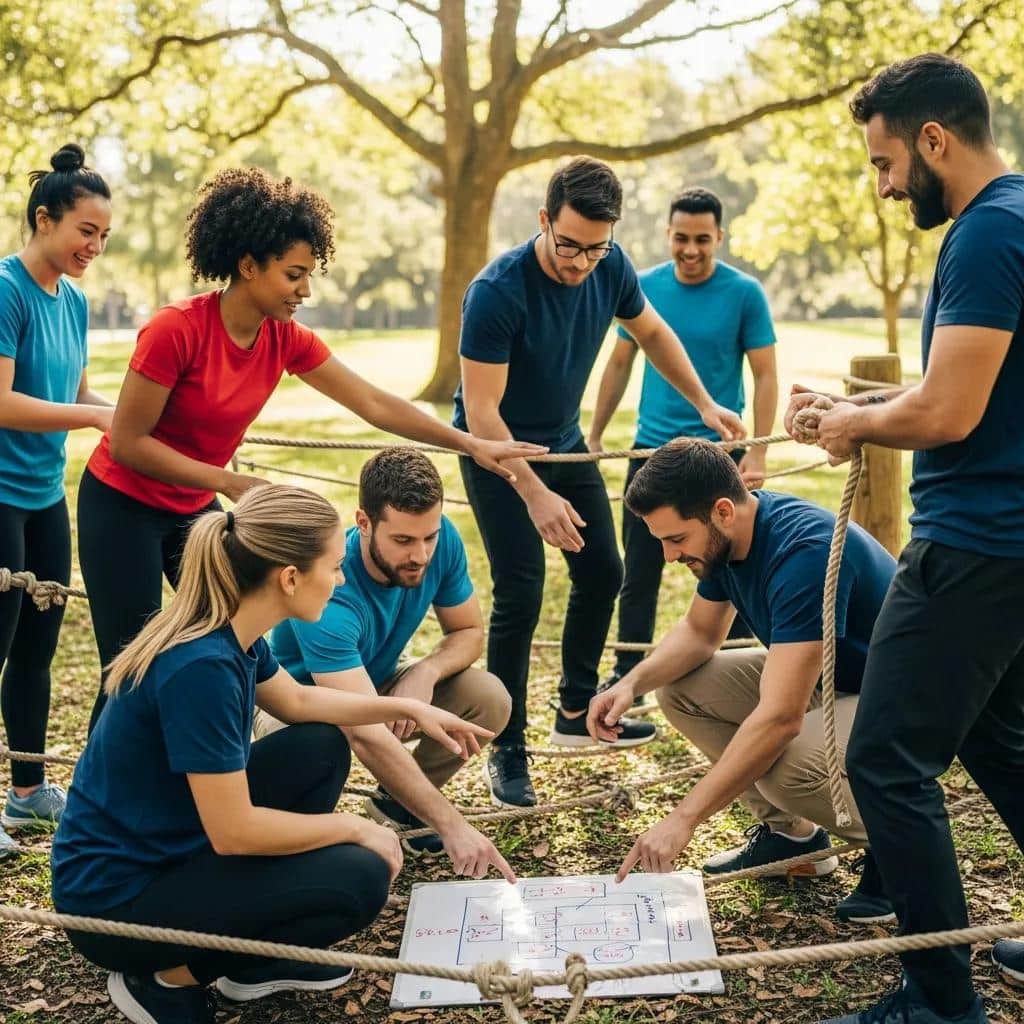
When I’m spinning tracks for a corporate retreat, I know the most effective team building activities are structured experiences designed to ignite collaboration, spark problem-solving, and unleash creative expression. These aren’t just activities; they’re catalysts for trust, communication breakthroughs, and lasting social bonds. They work by prompting shared vulnerability, observable collaboration patterns, and replayable rituals that teams carry back to the office. Choosing the right activity is like selecting the perfect track for the moment—it depends on your objectives, whether you’re aiming to boost psychological safety, spark creativity, or rehearse cross-functional coordination, and, of course, on constraints like group size and time. Below is my compact comparison of high-impact categories to help planners map activities to desired outcomes and logistics, followed by short examples of how interactive entertainment reinforces these effects.
The most effective categories, in my experience, include creative experiential art, high-stakes problem-solving challenges, invigorating outdoor/physical team tasks, and service-based projects that align with company values. Each category creates a different kind of shared narrative, a “remix” that teams recall and re-enact, which is why selecting activities tied to measurable objectives is crucial for sustained behavior change.
Different activities suit different group sizes, durations, and budgets. The table below is your quick-reference cheat sheet, helping you compare options before choosing the best fit for your retreat goals.
Intro to the activity comparison table: This table compares common retreat activities on group size, typical duration, expected outcomes, and a relative cost indicator so planners can select options that match their logistics and objectives, ensuring the vibe is always right.
This table clarifies how each activity aligns to common retreat goals and logistical constraints, helping planners prioritize based on outcomes and available resources, ensuring every choice contributes to the overall rhythm.
How DJ Graffiti’s Interactive Entertainment Elevates Employee Engagement
Interactive entertainment, in my world, isn’t just about fun; it’s about converting passive spectators into active co-creators, which dramatically increases emotional investment and memory encoding for team experiences. When teams participate—whether they’re painting a mural, solving a game-based challenge, or contributing to a live performance—they’re practicing new communication patterns under low-stakes conditions. This accelerates skill transfer back to work, like a seamless transition between tracks. Novelty and multisensory stimulation (visual art, sound, movement) heighten dopamine-driven attention and create a shared story, a “legendary set,” that employees reference afterward, promoting sustained social cohesion. For example, a participatory live graffiti session prompts rapid decision-making about color, theme, and composition while encouraging peer feedback and recognition. Understanding these mechanisms guides my selection of entertainment that deliberately targets engagement metrics like enthusiasm, willingness to collaborate, and reported connection, ensuring the energy never dips.
This mechanism-oriented view of interactive entertainment leads naturally to selecting specific creative event ideas that promote durable bonding and map perfectly to group sizes and time windows, ensuring every moment hits the right note.
DJ Graffiti’s Playlist: Creative Corporate Event Ideas for Strong Team Bonding
My go-to creative corporate event ideas that reliably promote bonding always combine collaborative creation, mutual support, and a visible artifact or narrative that the team keeps. Below are several ideas, complete with why they work and recommended group sizes and timeframes, to make your planning straightforward and your event legendary.
- Collaborative Team Mural: Small to mid-size groups (8–40) over 60–120 minutes; the visible artifact encourages pride and ongoing discussion, a lasting visual anthem.
- Live Graffiti Performance with Participatory Segments: Large groups (20–200) with a 45–90 minute performance; the surprise element and shared applause enhance morale, creating an unforgettable spectacle.
- Storytelling and Narrative-Building Workshop: 6–20 participants for 60–90 minutes; improves psychological safety and cross-functional empathy, helping teams write their shared story.
- Design Sprint-Style Challenge: Teams of 4–6 over 90–180 minutes; fosters rapid prototyping and role clarity under time pressure, a high-energy problem-solving jam.
- Service Day/Community Build: 10–100 participants for 2–4 hours; aligns corporate values with team purpose and civic pride, building something meaningful together.
- Gamified Scavenger or Mission Challenge: 12–100 participants for 60–120 minutes; encourages cross-team problem-solving and playful competition, a thrilling quest for connection.
These creative formats work because they produce both a shared artifact and a practice opportunity—this combination yields stronger retention of collaborative behaviors and makes follow-up measurement more straightforward, ensuring the impact is undeniable.
A short synthesis: choose ideas that produce both a shared artifact and a practice opportunity—this combination yields stronger retention of collaborative behaviors and makes follow-up measurement more straightforward, creating a lasting legacy.
DJ Graffiti’s Multi-Day Mix: Planning Corporate Retreats with Impactful Entertainment
Planning a multi-day corporate retreat is like orchestrating a multi-track album; you need to map entertainment to specific daily objectives so activities reinforce learning and relationship goals rather than distract from them. The core mechanism of effective sequencing is pacing: early sessions focus on onboarding and psychological safety, mid-retreat blocks prioritize deep collaboration and creative risk-taking, and closing sessions convert experiences into action plans and rituals. It’s all about building momentum and maintaining the energy. Logistics planning must align facilitator availability, space requirements, materials, and contingency buffers to preserve flow and allow meaningful reflection after each activity. A tactical day-by-day template helps planners allocate entertainment time blocks without overloading participants, while ensuring each element links back to measurable goals like engagement scores or post-retreat behavioral commitments. Below is my practical day-by-day template that shows how to sequence objectives and entertainment across a typical multi-day retreat, ensuring a seamless, impactful journey.
Intro to the day-by-day planning table: The following template pairs retreat days with objectives, entertainment types, time blocks, and basic prep needs to make execution smoother and outcomes clearer, ensuring every day hits the right note.
This template shows how entertainment aligns to daily objectives and clarifies materials and staffing needs, leading into practical steps for organizing a multi-day program, ensuring your event’s rhythm is perfectly tuned.
DJ Graffiti’s Backstage Pass: Key Steps for Organizing Successful Multi-Day Team Building Events
Organizing a successful multi-day event, from my perspective, begins with explicit objective-setting and KPI definition—these are your setlist and soundcheck, guiding activity selection and sequencing to avoid entertainment that feels disconnected from goals. After objectives are set, create an agenda that alternates active collaborative blocks with quiet reflection or work sessions to balance cognitive load and maintain the energy flow. Secure facilitators early for specialized formats—creative facilitators for art installations, certified instructors for physical challenges—and prepare materials and contingency plans for weather or space changes, because the show must go on! Communication to participants should set expectations and incentives while providing psychological safety guidelines to encourage participation. Finally, plan for the encore: schedule a brief post-retreat pulse and define how artifacts or rituals will be integrated into ongoing workflows, ensuring the impact lasts.
These operational steps reduce execution risk and ensure entertainment contributes to measurable outcomes, which leads into how specific formats like live graffiti art can be applied effectively, making every performance count.
How Live Graffiti Art Performances Elevate Retreat Experiences, DJ Graffiti Style
Live graffiti art performances, in my book, are pure magic for elevating retreat experiences. They combine spectacle, participation, and a tangible visual legacy that teams can reference long after the event. Formats range from a short, dynamic live painting performance to fully participatory mural workshops where every team member contributes a section under expert facilitator guidance. The core benefits include shared creative risk, immediate visual feedback, and a portable artifact that symbolizes team identity or a retreat theme—a collective masterpiece. Practical considerations include adequate indoor/outdoor space, protective drop cloths, ventilation if using aerosol materials, facilitator-led safety briefings, and clear time blocks—typically 45–120 minutes depending on participation level. Facilitators often structure short reflection prompts after the painting session to convert artistic collaboration into explicit team insights, ensuring the creative energy translates into real-world impact.
Using live graffiti as an intentional bonding exercise ensures entertainment is more than spectacle; it becomes a mechanism for collaborative identity-building and a bridge to post-retreat narratives, leaving an indelible mark.
DJ Graffiti’s Innovation Station: Interactive Corporate Entertainment Options for Retreats
Innovative interactive entertainment, for me, is all about blending art, technology, and expert facilitation to create inclusive experiences that scale from small teams to entire organizations. Hybrid and tech-enhanced options—such as live-streamed participatory art, AR-enhanced scavenger hunts, and gamified collaboration platforms—allow remote and in-person participants to co-create in real time, ensuring everyone feels the beat. Low-tech experiential activities like collaborative sculpture or large-scale collage keep costs down while delivering strong tactile engagement and visible outcomes. Selecting the right innovation depends on the audience’s tech comfort, the retreat’s objective, and the desired measurement approach: choose formats that make participation observable and data-capture straightforward to measure engagement, proving the magic. Below are my practical comparisons of innovative formats and when to use each, ensuring your event is always cutting-edge.
These innovation choices naturally raise the question of how to include remote participants effectively, which we address next, ensuring no one misses a beat.
DJ Graffiti’s Global Groove: Virtual and Hybrid Entertainment Solutions for Remote Teams
Virtual and hybrid entertainment solutions are essential for supporting remote teams, providing synchronous participatory formats that preserve equal voice and shared accomplishment across locations. Practical hybrid formats include: live-streamed interactive performances with remote voting and virtual paint tools; distributed team mural kits shipped in advance with a shared digital assembly session; and collaborative whiteboard challenges integrated with video breakout rooms. The required tech stack typically includes a reliable conferencing platform, moderated chat/voting tools, and an AV setup for high-quality streaming. Facilitators must design equitable participation pathways—rotating on-camera turns, clear roles for remote members, and shared artifacts that combine physical and digital contributions—to avoid remote participants becoming observers. These design choices help remote teams achieve similar engagement gains as in-person groups, ensuring everyone is part of the same rhythm, no matter where they are.
Designing for parity between remote and in-person attendees ensures innovation enhances, rather than fragments, team bonding, creating a truly unified experience.
DJ Graffiti’s Impact Meter: Experiential Activities That Drive Measurable Team Engagement
Experiential activities that drive measurable engagement, in my playbook, combine observable behaviors with simple pre/post measurement so organizers can link experiences to outcomes and prove the impact. Examples include collaborative workshops that end with commitment statements (which are tracked at 30 and 90 days), gamified challenges that record completion times and collaboration metrics, and participatory art that prompts rating of team cohesion before and after the activity. Measurement approaches are straightforward: short pulse surveys, behavioral observations by facilitators, and linking post-retreat productivity or cross-team collaboration metrics for longer-term signals. Designing activities with embedded measurement—such as checkpoints that capture teamwork behavior during challenges—creates direct evidence of impact and supports ROI discussions, turning subjective enthusiasm into undeniable data.
Embedding measurement into experiential formats converts subjective enthusiasm into actionable data for leadership review, proving the power of the experience.
DJ Graffiti’s Encore: Measuring the Success of Retreat Team Bonding and Employee Engagement Activities
Measuring retreat success, for me, is about decoding the impact. It requires selecting metrics that map to both short-term engagement and longer-term behavior change, and then using mixed methods—surveys, observational ratings, and business KPIs—to capture a complete picture. Core metrics often include engagement scores, Net Promoter Score for teamwork, behavioral indicators observed during tasks (turn-taking, conflict resolution), and follow-up signals like sustained cross-team projects or reduced cycle times. Measurement methods should be quick to administer and tied to explicit targets so stakeholders can see progress. The table below maps common metrics to measurement methods and typical value signals to help organizers choose the right mix for their objectives, ensuring you can always prove the magic.
Intro to the metrics table: This table connects each recommended metric to how to measure it and what a meaningful signal might look like for stakeholder conversations, helping you speak the language of impact.
These mapped metrics help translate retreat activities into business-relevant signals and set the stage for ROI conversations, proving that your investment in fun is an investment in success.
What Metrics Demonstrate Effective Team Building Outcomes?
Key metrics that demonstrate team building outcomes include both perception-based and behavior-based indicators: engagement and team NPS measure felt connection, while observed collaboration and task performance show behavioral change. Sample survey questions include short items like “I feel more comfortable asking colleagues for help” rated on a 5-point scale and “How likely are you to recommend your team as a place to work?” for team NPS. Baseline and target setting matters: use pre-retreat baselines and aim for specific percentage improvements (for example, a 10–15% increase in engagement scores) to make success claims defensible. Combining short pulse surveys with facilitator observations creates convergent evidence that is compelling to stakeholders, giving you a full picture of the impact.
Clear metric definitions and simple measurement tools enable credible reporting and provide a foundation for iterative improvement, ensuring your events get better with every beat.
How DJ Graffiti’s Case Studies Illustrate ROI of Creative Corporate Entertainment
Brief, anonymized case summaries are my way of showing how creative entertainment can produce measurable returns: for example, a team mural workshop followed by a 30-day pulse might show a 12% rise in psychological safety and a corresponding increase in cross-team ticket sharing; a design sprint paired with a follow-up tracking of project handoffs might reduce time-to-delivery by measurable margins. Case vignettes typically report before/after metrics, qualitative feedback, and tangible outcomes like an internal recognition program that persisted after the retreat. These examples help stakeholders understand what to expect and how small investments in experiential entertainment can yield productivity and retention signals over time, proving the transformative power of a well-curated experience.
Real-world summaries tie activity choices to outcomes and illustrate practical lessons for scaling successful formats across the organization, turning every event into a success story.
DJ Graffiti’s Future Beats: Trending Corporate Event Ideas for Enhancing Team Bonding in 2023-2025
The future of corporate retreats, from my vantage point, is all about hybrid inclusivity, measurable experiential formats, and creative collaborations that produce shareable artifacts and rituals. From 2023 through 2025, organizers are increasingly prioritizing formats that combine art-driven experiences with data capture, piloting low-risk innovations before scaling, and seeking vendors who can support both remote and in-person parity. These trends reflect a broader shift toward treating retreats as strategic interventions rather than just morale boosters. The list below highlights current trends and rapid adoption tips to help planners pilot promising ideas, ensuring your events are always ahead of the curve.
- Hybrid-first experiences: Design activities that include remote participants equally; pilot small before full rollout, ensuring everyone’s in the mix.
- Creative experiential focus: Use art-based, tactile formats for deeper emotional bonding; budget for materials and facilitation, making every touchpoint memorable.
- Measurement-driven programming: Embed simple metrics to prove impact; report to stakeholders with before/after comparisons, showing the tangible results.
- Micro-retreats and modular formats: Shorter, focused sessions that scale across teams; test modules before adopting company-wide, building a flexible playlist.
These trends suggest planners should invest in formats that are repeatable, measurable, and inclusive, leading naturally to guidance on how to integrate new activities and keep the energy flowing.
Which Entertainment Trends Are Shaping Future Corporate Retreats?
Several trends are shaping retreats: the seamless integration of art and technology, a strong emphasis on inclusivity in hybrid settings, shorter modular formats for ongoing engagement, and stronger ties between entertainment and business objectives. Each trend matters because it changes vendor selection criteria and planning processes—for example, choosing facilitators experienced in hybrid delivery or selecting activities that produce artifacts for ongoing rituals. My implementation tip: pilot a single modular experience with clear metrics before scaling to multiple teams, ensuring a smooth transition.
Trend-driven choices help organizations remain adaptive and ensure retreats deliver consistent strategic value, keeping your company’s rhythm strong.
How Companies Can Integrate New Interactive Activities to Boost Engagement, DJ Graffiti’s Way
To integrate new activities, start with a small pilot that includes objective-setting, a simple measurement plan, and a debrief with stakeholders—think of it as a test track before the main event. Governance steps involve defining responsible owners, budget thresholds for pilot runs, and vendor evaluation criteria emphasizing facilitation skill and hybrid capabilities. Scale successful pilots by codifying modules into an internal playbook and training in-house facilitators or selecting verified partners for repeat engagements. This incremental approach reduces risk and builds internal capability, ensuring every new addition enhances the overall experience and delivers measurable results.
A disciplined pilot-to-scale approach ensures new entertainment formats enhance engagement reliably and can be justified to leadership through measurable results, proving the power of a well-curated experience.

