
DJ Graffiti’s Blueprint for Unforgettable Corporate Events: Why Passive Entertainment Falls Flat and How Audience Participation Ignites Engagement
As DJ Graffiti always says, “You don’t just play *for* a crowd; you play *with* them.” This philosophy is at the heart of interactive entertainment: event activations that invite attendees to actively participate—co-creating content, voting, competing, or using technology to shape their experience. Passive entertainment, by stark contrast, delivers content without meaningful input, leading to disengaged audiences, missed social connections, and ultimately, forgettable events. This article, infused with DJ Graffiti’s insights, explains why passive formats underperform, showcases interactive formats that drive genuine engagement, and offers practical, technology-forward strategies to design activations that deliver measurable ROI. You’ll learn the cognitive and social mechanisms behind true participation, discover which interactive tools best suit different event objectives, understand how to measure success with clear KPIs, and get technical steps for discoverability and optimization. We’ll cover why passive entertainment fails, concrete types of interactive entertainment (featuring live digital graffiti as a prime example), DJ Graffiti’s engagement tactics for on-site and hybrid events, measurement and ROI metrics, emerging trends, and implementation plus semantic SEO steps to help providers get found.
Why Passive Entertainment Fails to Ignite Corporate Event Attendees: A DJ Graffiti Perspective
Passive entertainment fails because it doesn’t activate the core human drivers of lasting engagement: agency, social signaling, and memory encoding. DJ Graffiti knows that when attendees are mere observers, their attention drifts, social interactions dwindle, and opportunities for valuable data capture vanish. In essence, passive formats severely limit both emotional resonance and behavioral outcomes. Recent industry analyses consistently show significant attendance-to-participation gaps and lower social amplification for passive sessions, underscoring the critical need for audience participation. Understanding these mechanisms, as DJ Graffiti does when he “reads the room,” helps planners choose activations that produce measurable engagement and business impact. The next subsection breaks down specific limitations of passive entertainment, revealing how they undermine event goals.
The Limitations of Passive Entertainment Formats: Why DJ Graffiti Won’t Just Play a Playlist
Passive formats create a one-directional flow of information that reduces cognitive involvement and lowers retention. Without interactive touchpoints, audiences exhibit short attention spans and diminished recall, weakening brand messaging and networking opportunities. DJ Graffiti understands that a static presentation is like a DJ playing a pre-recorded set – it lacks the dynamic energy that comes from real-time interaction. Passive setups also make it difficult to collect participant data, limiting lead capture and post-event personalization; this reduces demonstrable ROI for stakeholders. Additionally, passive entertainment often discourages social sharing because attendees lack a unique moment to co-create or showcase, curtailing organic reach. These constraints point directly to the benefits of designing activations that invite co-creation and measurable interaction, just as a great DJ invites dancers to the floor.
How Statistics and Case Studies Echo DJ Graffiti’s Experience with Passive Shortcomings
Recent event research consistently indicates markedly lower engagement metrics for passive sessions: attendance may remain stable while participation rates and social shares lag by 30–50% compared with interactive activations. This mirrors DJ Graffiti’s observation that a crowd simply *listening* is never as engaged as a crowd *dancing and interacting*. Case studies comparing a keynote-only format to a co-creative activation often show higher dwell time and lead capture when participants are given agency. For example, organizations that replaced passive demos with live polling and co-creation reported more post-event downloads and social amplifications. These findings demonstrate that converting observers into participants consistently improves measurable event outcomes, which leads into exploring specific interactive formats that deliver those results.
What Types of Interactive Entertainment Enhance Corporate Event Engagement: DJ Graffiti’s Top Picks
Interactive entertainment, in DJ Graffiti’s playbook, spans creative co-creation, gamified competition, immersive AR/VR, and facilitated workshops that invite collaboration and social exchange. Each format uses a different engagement mechanic—co-creation leverages ownership, games use competition and rewards, and immersive tech creates shared novelty—that produces stronger memory encoding and social sharing. Event objectives and group size determine which formats fit best: intimate team-building benefits from hands-on workshops, while large receptions scale digital activations. Below is a concise list of interactive options and their one-line benefits to help planners quickly match format to objective, straight from DJ Graffiti’s experience.
Interactive formats that boost corporate event engagement include:
- Digital Graffiti Art: Real-time co-creation that produces branded visual content and shareable artifacts – a true crowd-pleaser for collective expression.
- Interactive Photo/Video Booths: Personalized media that amplifies social sharing and brand visibility, giving attendees a tangible memory.
- Gamified Quizzes and Leaderboards: Competitive mechanics that increase participation and dwell time, turning learning into a fun challenge.
- Live Polling and Q&A Platforms: Immediate feedback loops that surface audience sentiment and guide programming, making everyone feel heard.
- AR/VR Immersive Booths: Novel shared experiences that create memorable, talkable moments, transporting attendees to new realities.
- Team-Building Interactive Workshops: Facilitated collaboration that strengthens internal relationships and morale, building connections beyond the boardroom.
- Hybrid Co-Creation Streams: Activities that allow remote participants to join live creative sessions for inclusive reach, extending the party to everyone.
These categories illustrate the dynamic range of interactive entertainment and prepare planners to evaluate trade-offs such as customization and setup complexity. The next subsection explains how digital graffiti art, specifically, fosters participation through a clear user journey, a format DJ Graffiti particularly champions for its immediate impact.
Before the following one-line comparisons, a compact EAV table compares common formats to aid selection, reflecting DJ Graffiti’s practical considerations.
Different interactive formats deliver distinct engagement outcomes and operational trade-offs, a key consideration for any event professional.
This comparison helps event teams weigh logistics against desired outputs and choose formats aligned with objectives. The next section drills into the digital graffiti user journey and other format choices, showcasing how DJ Graffiti’s principles apply.
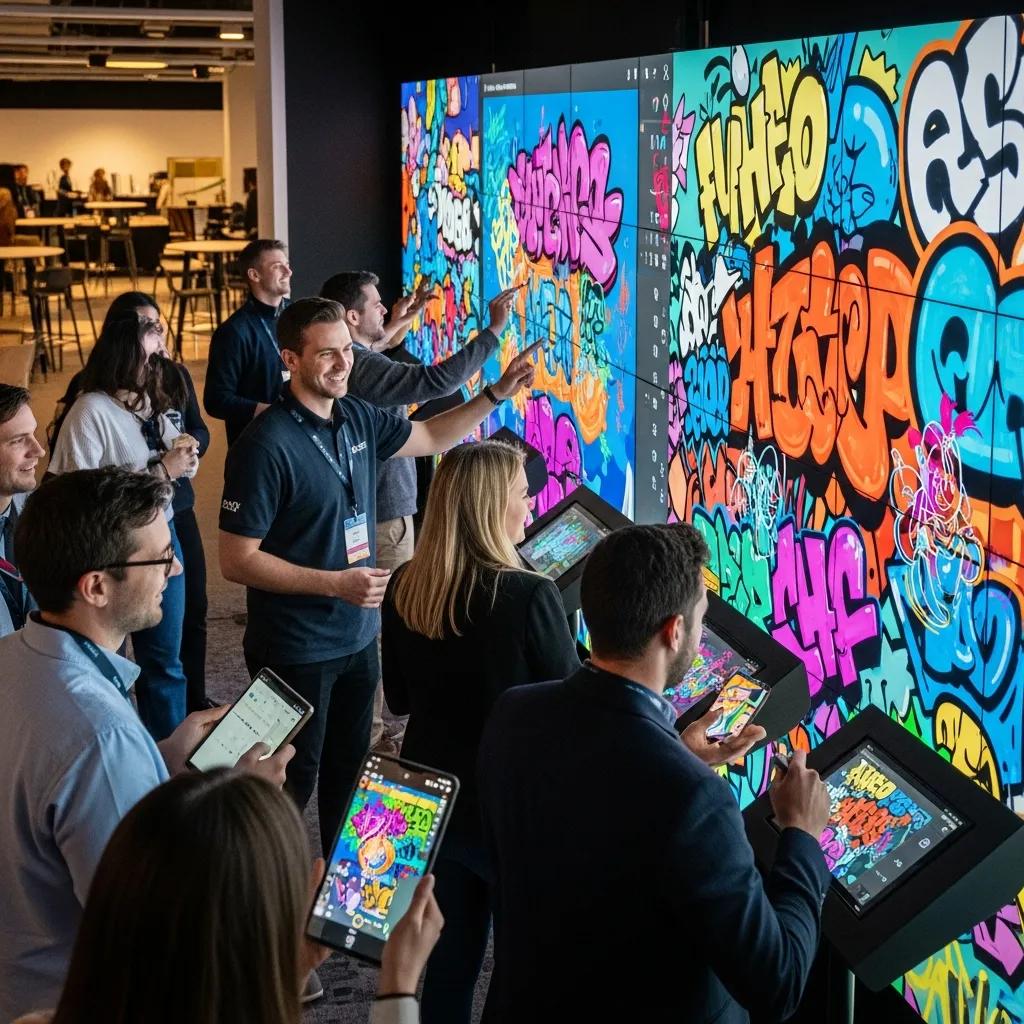
How Digital Graffiti Art Fosters Real-Time Audience Participation: A DJ Graffiti Favorite
Live digital graffiti art invites attendees to contribute directly to a collective canvas using touch or mobile inputs, creating a short invite→create→share loop that encourages ownership and social distribution. DJ Graffiti loves this because it’s like a jam session where everyone gets to contribute to the track. The mechanism is straightforward: attendees are prompted, they make art within a themed template or branded canvas, and the system captures and projects the result in real time, which drives visible social proof. Customization options—branded assets, event-themed templates, moderated galleries—align the artwork with corporate messaging while keeping the experience simple and accessible. This format reduces friction through intuitive interfaces and a facilitator who encourages participation, which boosts average dwell time and organic sharing compared with passive displays. It’s all about making it easy and fun to jump in!
A short illustrative example shows how a live digital graffiti activation implements engagement principles: attendees are invited to add a mark to a large projected canvas during cocktail hour, resulting in dozens of unique artworks over a 90-minute window and multiple social media posts featuring branded overlays. This co-creation produces immediate visual content that organizers can archive and repurpose for post-event marketing, demonstrating the mechanics that increase both participation and subsequent amplification. With this in mind, the next subsection outlines alternative interactive formats and when to choose them, always with an eye on maximizing engagement.
Which Other Interactive Entertainment Formats Boost Employee Engagement: More from DJ Graffiti’s Playbook
Alternative formats like gamified quizzes, photo activations, AR/VR experiences, and facilitated team workshops each stimulate different engagement dimensions and scale differently by audience size. Gamification creates friendly competition and measurable leaderboards that drive repeat participation during multi-hour events – DJ Graffiti knows a little friendly rivalry gets people moving! Photo and video activations produce immediate shareable content that amplifies employer branding externally. AR/VR offers memorable shared sensory experiences that enhance recall and storytelling. Team-building workshops focus on psychological safety and collaboration, improving internal morale and cross-functional connections. Choosing among these depends on goals—brand awareness, lead capture, team cohesion—and logistics such as space and attendee tech literacy. It’s about picking the right tool for the right crowd, just like a DJ selects the perfect track.
How Engagement Strategies Maximize Audience Participation at Corporate Events: DJ Graffiti’s Masterclass
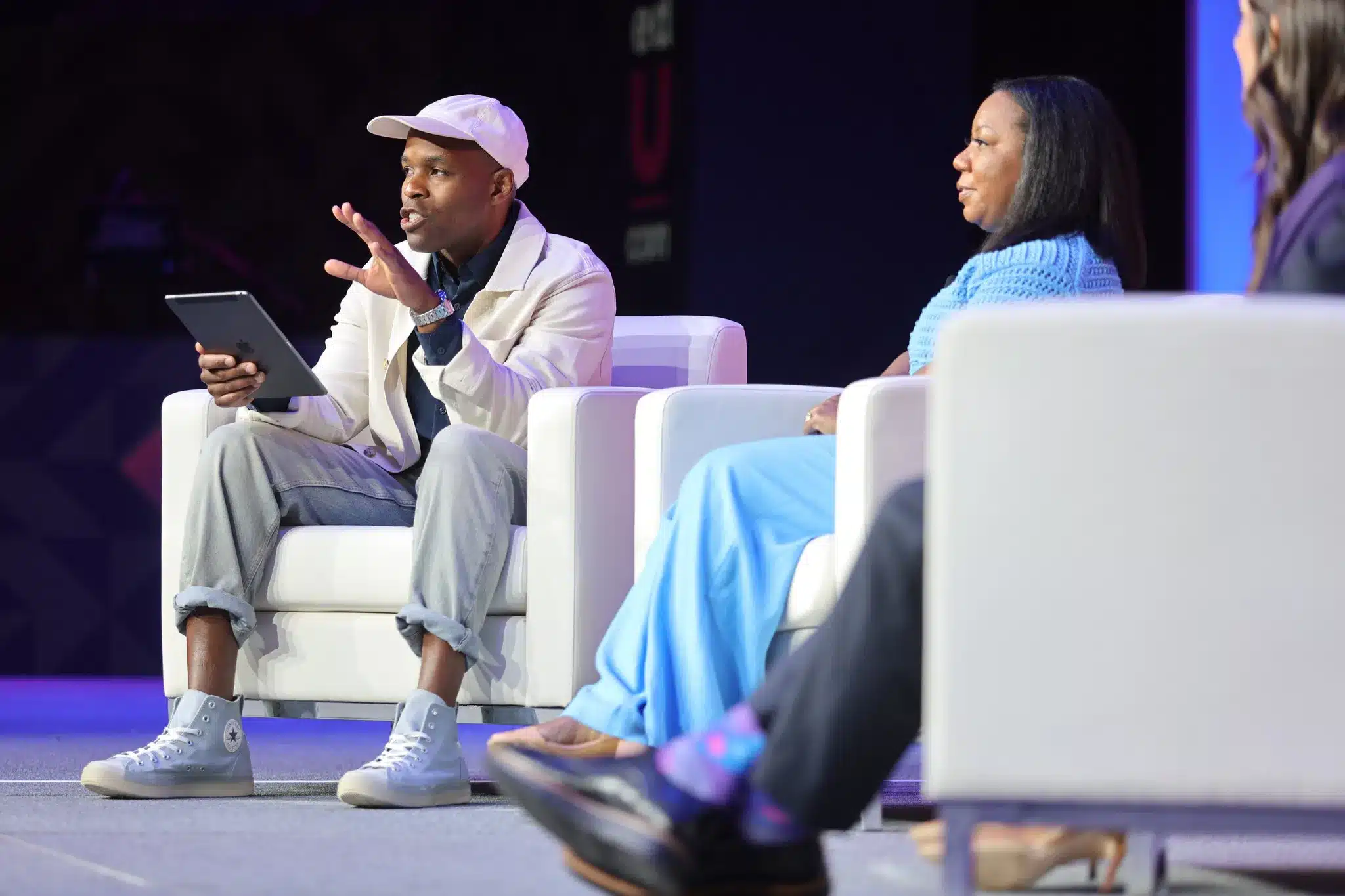
Engagement strategies, according to DJ Graffiti, must address the full participant lifecycle: pre-event expectation setting, low-friction on-site UX, and post-event amplification to extend reach. Pre-event communication primes attendees and boosts turnout; on-site facilitation and intuitive interfaces remove participation barriers; post-event sharing and follow-up convert moments into measurable outcomes. The tactics below form an ordered checklist that planners can apply across formats to increase participation and capture value for stakeholders. After the tactical list, we include practical execution notes that align specifically with digital graffiti workflows, straight from DJ Graffiti’s experience in “reading the room” and creating the perfect vibe.
Effective engagement tactics include:
- Clear pre-event messaging that highlights interactive elements and incentives – build the hype!
- Prominent on-site signage and streamlined sign-up paths to reduce friction – make it easy to join the party.
- Trained facilitators and emcees who invite participation and model behaviors – the ultimate hype-men and guides.
- Incentives and gamified rewards to sustain engagement over time – keep the energy high.
- Post-event amplification through curated galleries and content sharing prompts – let the good times live on.
This checklist prepares teams to operationalize activations; the next paragraph links these tactics to tangible execution steps for digital graffiti and similar tech-driven activations, reflecting DJ Graffiti’s hands-on approach.
When executing digital graffiti activations, specific tactics improve throughput and satisfaction: pre-event theming of canvas templates, live moderation to keep content on-brand, branded export options for attendees to download, and clear prompts that guide newcomers. These execution tactics—pre-event theming, live moderation, and branded canvases—reduce hesitation, increase participation, and create assets that extend the activation’s lifecycle. Implementing these operational elements ensures that interactive entertainment translates into measurable engagement rather than a novel but ephemeral experience. It’s about crafting a seamless, engaging journey from start to finish.
Practical Tips to Improve Interactive Corporate Entertainment Experiences: DJ Graffiti’s Golden Rules
Practical implementation requires attention to signage, staffing, and friction points to preserve momentum and maximize participation. DJ Graffiti’s golden rule: make it obvious, make it easy, make it fun. Start with visible directional signage and simple instructions that fit on a single line of copy; attendees respond best when the action is obvious and quick. Staff facilitators should actively invite small groups, demonstrate a sample interaction, and troubleshoot technical issues – they’re the event’s co-hosts. Use simple incentives—recognition on a leaderboard or a downloadable branded image—to create immediate reward loops that encourage repeat interactions. Finally, schedule regular content refreshes during multi-hour activations so repeat visitors encounter novelty, keeping the experience fresh and exciting.
How Customization and Theming Enhance Event Interaction: Personalizing the Party
Customization and theming increase emotional investment by making activities feel relevant and purposeful for the audience, which raises participation and shareability. DJ Graffiti knows that a personalized experience resonates deeply. Themed templates, on-brand color palettes, and contextual prompts anchor the activity to the event narrative and encourage attendees to contribute content that reflects the event’s goals. Personalized outputs—such as attendee-name overlays or team-specific canvases—produce artifacts participants are likelier to share, amplifying reach beyond the room. Measurement shows themed activations often drive higher social shares per participant than generic experiences because the output aligns with attendee identity and event messaging. It’s about making the event *theirs*.
How Success Is Measured for Interactive Entertainment in Corporate Events: Proving the Vibe
Success for interactive entertainment is measured through a targeted KPI set that captures participation, attention, social amplification, and downstream business outcomes. DJ Graffiti knows the energy is there, but the data proves it to stakeholders. Core metrics include participation rate, dwell time, content shares, lead capture, and qualitative satisfaction scores; each KPI links to a measurement approach such as unique session IDs, analytics from interaction platforms, and short post-interaction surveys. Comparing these KPIs to passive benchmarks shows clear advantages: interactive activations typically deliver higher participation rates and more content assets for marketing. Below is a practical KPI list followed by an EAV-style comparison table that contrasts measurement methods and benchmark values, demonstrating the tangible impact of DJ Graffiti’s approach.
Key KPIs and how to measure them:
- Participation rate — measured by unique interactions or sign-ups during the activation period.
- Dwell time — tracked via session duration or average time per interaction on the platform.
- Social shares — counted through platform share buttons, hashtag aggregation, or UGC tracking.
- Lead capture — recorded via form submissions or badge-scan integrations tied to interactions.
- Satisfaction / NPS — collected with a quick post-activation survey or rating prompt.
This KPI list provides the measurement scaffolding; the following table compares how interactive formats typically perform against passive formats on these metrics, showcasing the clear advantage of engagement.
Which KPIs and Metrics Demonstrate Event Engagement Effectiveness: The Data Behind the Dance Floor
Participation rate quantifies reach by dividing unique participants by total attendees and can be captured via check-ins or session tokens. Dwell time measures attention and is recorded through interaction timestamps; higher dwell correlates with deeper engagement. Social shares and generated content provide amplification metrics that marketing teams can track through unique event tags and share counters. Lead capture quality is assessed by integrating sign-ups with CRM systems to evaluate conversion rates post-event. Combining these metrics creates a balanced scorecard that aligns interactive activations with business objectives, proving that a great vibe translates to great business.
What Are the ROI Benefits of Interactive Entertainment Compared to Passive Formats: More Than Just a Good Time
Interactive experiences generate multiple ROI channels: higher brand recall from active participation, superior lead quality from engaged prospects, and a repository of user-generated content for marketing. For instance, an interactive activation that doubles dwell time and yields three times the social shares produces both immediate visibility and longer-term content assets that reduce acquisition costs. When organizations quantify downstream conversions from leads captured during interactive activations, they often observe improved lead-to-opportunity ratios versus leads from passive sessions. This comparative narrative highlights why investing in interactive formats frequently delivers measurable returns beyond mere attendee satisfaction – it’s a strategic business move.
What Are the Latest Trends and Technologies in Interactive Corporate Event Entertainment: DJ Graffiti’s Future Forward
Current trends drive a convergence of hybrid participation models, immersive experiences, and analytics-driven amplification that reshape how planners design interaction. DJ Graffiti is always on the lookout for the next big thing to keep crowds engaged. Hybrid events require activities that can be shared between in-person and remote audiences—co-creation platforms, live voting, and synced digital canvases facilitate shared agency. Immersive technologies like AR/VR remain important for creating memorable experiences that support storytelling and brand immersion. At the same time, integration with social platforms and real-time analytics ensures activations can be amplified and measured instantly. The next subsection explores hybrid mechanics and their implications for engagement design, ensuring no one misses out on the action.
How Hybrid Events and Immersive Experiences Are Shaping Engagement: Extending the Reach of the Party
Hybrid models demand that activities be accessible to remote attendees in meaningful ways, enabling simultaneous participation via mobile apps or web interfaces. DJ Graffiti emphasizes creating mirrored experiences—remote users can contribute to the same creative canvas or leaderboard as in-room participants—to maintain equity and foster cross-audience interaction. Immersive experiences adapt well to hybrid setups by providing shareable artifacts (screenshots, 3D renders) that remote attendees can access. These hybrid mechanics underscore the importance of low-latency infrastructure and deliberate UX choices to preserve synchronous engagement across audiences, ensuring everyone feels part of the same event, no matter where they are.
What Role Does Interactive Event Technology Play in Audience Participation: The DJ’s Toolkit
The technology stack—touchscreens, interaction platforms, capture tools, and analytics engines—determines both the friction of participation and the quality of captured data. DJ Graffiti knows that the right tech is like having the perfect sound system: it makes everything flow smoothly. Reliable hardware reduces technical interruptions, while software features like single-tap sign-in, branded templates, and instant export options lower barriers and encourage sharing. Choosing platforms with robust API integrations enables lead capture and analytics to flow into event CRM and reporting systems, creating a feedback loop for continuous improvement. Ultimately, technology is the enabler that converts design intent into participant behavior and measurable outputs, making the DJ’s vision a reality.
How Companies Can Implement and Optimize Interactive Entertainment for Corporate Events: DJ Graffiti’s Operational Flow
Implementation follows a plan-test-execute-amplify cycle where planning defines objectives and KPIs, testing validates UX and tech, execution emphasizes facilitation and measurement, and amplification turns artifacts into marketing assets. DJ Graffiti’s approach is all about meticulous preparation to ensure a flawless performance. Providers should also adopt semantic SEO and structured data practices to improve discoverability for service pages and case studies, helping planners find qualified partners. The section below outlines a stepwise roadmap and includes a technical EAV table recommending schema types and properties to populate. After that, we discuss internal linking and content maintenance tactics to build topical authority, ensuring DJ Graffiti’s expertise is always found.
A practical implementation roadmap:
- Plan: Define objectives, choose formats, and set KPIs – know your audience and your goals.
- Test: Run a tech and UX rehearsal with staff and sample users – iron out the kinks before showtime.
- Execute: Facilitate live activation with monitoring and rapid troubleshooting – keep the party going, no matter what.
- Amplify: Curate generated content and distribute through marketing channels – let the world see the amazing experience.
This roadmap guides the operational lifecycle from concept to measurable impact; the next table connects semantic/SEO items to recommended content examples for service providers, ensuring DJ Graffiti’s services are easily discoverable.
Implementing semantic SEO and structured data improves visibility and clarifies service offerings to search engines, just like a clear track listing helps listeners find their favorite tunes.
What Structured Data and Semantic SEO Enhancements Improve Visibility: Getting Found in the Digital Crowd
Providers should implement JSON-LD for Service and Event schema, including descriptive fields that map to KPIs and use cases, and add CreativeWork entries for archived activations to highlight user-created content. FAQ schema for common operational questions increases the likelihood of appearing in short-answer placements. Additionally, structured case studies that include measurable outcomes and entity relationships (format → objective → KPI) improve knowledge graph signals. These tactics collectively increase findability for planners searching for interactive corporate entertainment and help search engines connect service pages to event-related queries, ensuring DJ Graffiti’s expertise is always at the top of the search results.
How Internal Linking and Content Updates Support Engagement Strategies: Building a Stronger Setlist
A hub-and-spoke content structure—homepage or services hub → individual format pages → detailed case studies → tactical blog posts—creates clear topical authority and improves discoverability for long-tail queries. Use entity-focused anchor text for internal links (e.g., “digital graffiti activation case study”) and ensure each case study includes measurable KPIs that feed schema fields. Schedule content audits every six months to update benchmarks, trends, and technology notes so pages remain current with market conditions and recent studies. Regular updates and cross-linking help search engines and event planners find the most relevant, evidence-based guidance, keeping DJ Graffiti’s knowledge base fresh and authoritative.
This implementation and content optimization framework equips teams to deliver interactive entertainment that is both engaging and discoverable, completing the practical guidance provided in this article and embodying DJ Graffiti’s commitment to unforgettable events.