
Magician Entertainment for Corporate Events: My Secret Weapon for Unforgettable Experiences
As a corporate event DJ and emcee, I’ve seen it all, and let me tell you, corporate magician entertainment is a game-changer. It’s not just about tricks; it’s about strategically deploying trained performers to create genuine moments of surprise and wonder. These aren’t your kid’s birthday party magicians; we’re talking sophisticated, interactive experiences like close-up magic, mentalism, and even grand illusions that spark conversation, foster networking, and make any event truly memorable. When I’m advising clients, I emphasize how magic breaks the ice, amplifies engagement, and provides brand-safe content that encourages cross-table conversations and extends dwell time. This article is my insider’s guide, explaining why professional magician entertainment is a strategic asset, surveying the best performance types for corporate programming, and outlining the practical hiring and production considerations for in-person, virtual, and hybrid events. You’ll get my checklists, comparison tables, and planning steps to make selecting the right format a breeze—whether you’re booking a close-up magician for cocktail hour, a mentalism segment during a keynote reception, or a livestreamed illusion for remote attendees. Trust me, this is a must-have in your entertainment toolkit.
Why Magicians Are a Must-Have in My Entertainment Toolkit for Corporate Events
From my vantage point, professional magician entertainment for corporate events is a purpose-built form of engagement. It’s designed to use interactive performance techniques to skyrocket attendee engagement, generate organic conversation, and support brand-appropriate experiences. The mechanism is elegantly simple: surprise, combined with a touch of personalization, creates an emotional resonance that compels attendees to talk, share, and connect with people they might not otherwise meet. When a performer approaches small groups, executes a personalized routine, or reveals a mind-reading moment tied directly to the audience, those moments become powerful conversation anchors that linger long after the trick is done. The key here is professionalism—it ensures the content, tone, pacing, and messaging perfectly fit the corporate environment, supporting your event objectives rather than distracting from them. Understanding these dynamics helps me integrate magic into agendas where it truly shines, boosting networking and memorability.
Interactive magician shows deliver clear benefits that align perfectly with corporate goals:
- Engagement Multiplier: These performances transform passive observers into active participants, dramatically increasing attention and dwell time.
- Instant Conversation Starters: A shared moment of surprise is a neutral, memorable prompt that effortlessly encourages cross-team interactions, making networking feel natural, not forced.
- Brand-Safe & Seamless: Professional magicians are masters at tailoring their tone and content to corporate guidelines, ensuring the entertainment reinforces your brand message, never clashes with it.
These three core benefits directly inform my recommendations for performance type and timing, which we’ll dive into next.
The Secret Sauce: How Interactive Magic Supercharges Engagement & Networking
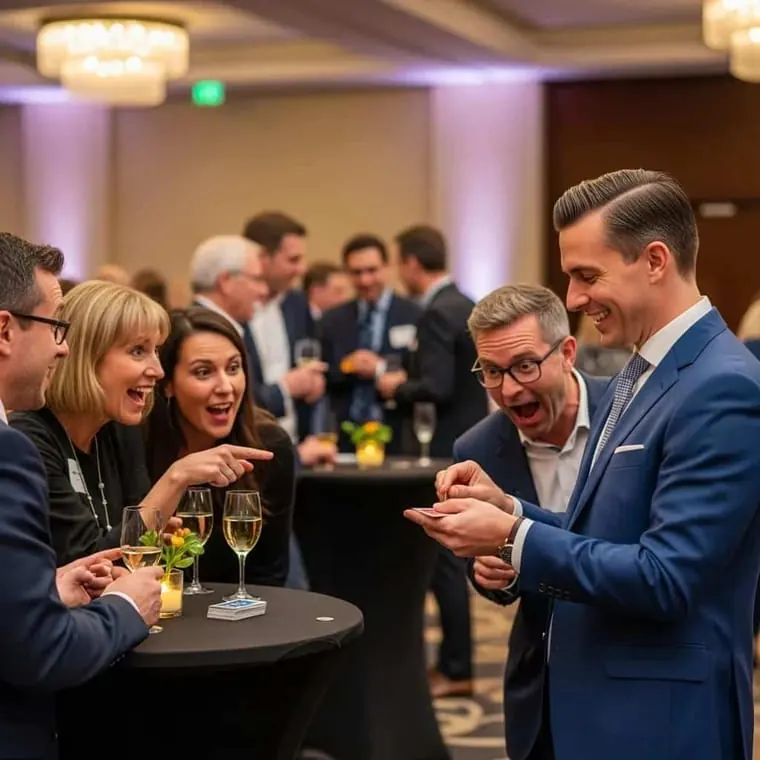
Interactive magic shows are engagement powerhouses because they create micro-moments of astonishment that compel attendees to gather, comment, and emotionally invest. Think about it: walkaround close-up routines during cocktail hours naturally draw small clusters, giving attendees a perfect reason to linger and exchange impressions with colleagues. Table magic during seated meals creates localized surprises that spark conversation at every table, encouraging sharing across tables during breaks. And mentalism? Those personalized revelations or predictions often generate incredible social currency because they feel uniquely tailored, prompting participants to seek out others who witnessed the moment. Each of these formats converts passive attendance into active interaction, directly supporting networking objectives and significantly increasing the likelihood of post-event follow-up and connection. It’s a fantastic complement to background music or a DJ set, adding a dynamic, personal touch that other entertainment can’t quite replicate.
These interaction mechanics are why I always consider specific logistical choices, like performer-to-attendee ratios and strategic placement, to ensure the engagement spreads effectively across the room. The next section contrasts the formats to help you choose wisely.
My Go-To’s: Close-Up Magic & Mentalism for Maximum Impact
When it comes to corporate events, close-up magic and mentalism are my absolute go-to’s. Why? Because they deliver incredible intimacy and personalization without demanding a massive production footprint. Close-up magic is incredibly versatile; it travels through the crowd, creating one-on-one or small-group engagement that feels personal and truly memorable. It’s perfect for cocktail receptions and networking areas where mobility is key. Mentalism, on the other hand, provides an unparalleled "talkability" factor. Those revelations often feel bespoke and provoke discussion long after the act. Unlike full-scale stage illusions, these formats minimize disruption to your program flow while maximizing interpersonal impact. They’re ideal when your goal is to stimulate conversation without overshadowing presentations or awards. Choosing between the two depends on your audience size, desired emotional intensity, and available space—close-up for broad, roaming engagement, and mentalism for high-impact, memorable moments that truly seed conversation. They work beautifully alongside a DJ, providing a different kind of energy and interaction.
These considerations lead directly into a practical comparison of performance types, their settings, and logistical needs in the following section.
Picking the Right Magic Vibe: A Pro’s Guide to Performance Types
Selecting the right magic performance type is crucial and depends entirely on your event goals, audience size, space constraints, and desired level of audience interaction. My common corporate-friendly formats include close-up magic for receptions, mentalism for high-impact networking, stage illusions for large-scale spectacle, and virtual or hybrid magic for dispersed audiences. Each format has its unique trade-offs: close-up maximizes intimacy and participation, mentalism maximizes memorability and social currency, stage illusions deliver spectacle for plenary sessions, and virtual/hybrid formats connect remote attendees through camera-focused routines and interactive digital cues. Understanding these trade-offs helps me place magic where it will most effectively support networking, branding, or keynote engagement, often complementing a main stage act or a DJ’s energy.
This table clarifies how each format fits into event workflows and highlights interaction expectations to guide your selection. The next section outlines the features and logistics for each format from an operational perspective.
Breaking Down the Magic: What Each Style Brings to the Table
From an operational standpoint, close-up magic features portable routines performed within arm’s reach, minimal lighting needs, and quick interactions designed to fit seamlessly into networking pauses. Mentalism, on the other hand, relies on psychological techniques, audience prompts, and personalized moments that often require tighter scripting and careful audience selection to achieve maximum effect. Illusion acts on a stage demand significant AV coordination, staging, and a controlled sightline to deliver those larger visual moments. Each format has specific operational needs: close-up and mentalism prioritize performer mobility and proximity, while illusions require stage access, crew, and technical rehearsal. Recognizing these feature differences helps me allocate AV support, schedule performer windows, and anticipate how the format will influence attendee flow and conversation dynamics. It’s all about integrating the magic flawlessly with the rest of your event’s production, whether it’s a DJ, a band, or a speaker.
These operational distinctions lead us into how virtual and hybrid formats adapt these strengths for remote audiences and production constraints.
Future-Proofing Your Event: Virtual & Hybrid Magic in the Mix
In today’s world, virtual and hybrid magician formats are essential. They translate the mechanics of surprise and personalization into camera-driven experiences that engage remote participants through expert framing, close-ups, and interactive platform features. We’re talking stage-to-camera shows where the performer uses tight camera angles and split-screen reveals, or interactive webinar routines where remote attendees respond via polls or chat to participate in live reveals. Production considerations are key here: multi-camera setups, reliable streaming bandwidth, clear host integration to bridge the stage and virtual audience, and meticulous rehearsal to calibrate timing between live and remote cues. With careful planning, virtual magicians can produce interactive moments that mirror in-person astonishment and provide remote attendees with participation pathways that lead to conversation in chat and follow-up networking. It’s a fantastic way to ensure your remote audience feels just as connected and entertained as those in the room, complementing any virtual DJ or speaker.
Beyond the Tricks: Magic as a Networking & Team-Building Powerhouse
Magic entertainment isn’t just a show; it’s a powerful tool for boosting networking and team building. It creates low-risk, high-reward social stimuli that genuinely encourage attendees to approach one another and form shared memories. The psychological mechanism is shared surprise: when people experience novelty together, they are more likely to perceive each other positively and to initiate conversation. For team building, structured activities—such as collaborative problem-solving workshops that use sleight-of-hand principles or interactive sessions where teams decode a performer’s clues—leverage these same mechanisms to promote collaboration and creative thinking. Measuring outcomes can use KPIs like increased dwell time near activation areas, a rise in cross-department introductions, or an uplift in post-event survey scores related to networking success. Recognizing these benefits helps me design magic-based elements that intentionally target networking and internal cohesion, making it a perfect partner for any team-building exercise or networking reception.
This mapping links entertainment mechanics to planner-oriented outcomes and helps set expectations for ROI. The next section enumerates specific engagement benefits and a vignette showing how they play out in practice.
The Engagement Multiplier: Why Interactive Magic Wins
Interactive magic supports multiple engagement outcomes that are gold for any event. It increases the approachability of a room, provides neutral conversation prompts, and raises the emotional salience of an event moment. For example, during a networking reception, a close-up magician working the crowd can create dozens of micro-interactions that serve as social glue, encouraging attendees who might otherwise stand alone to join conversations. These interactions also create fantastic content opportunities—attendees share moments on social media or reference the experience in follow-up communications, extending the event’s reach far beyond the venue. For planners, the practical benefits include higher attendee satisfaction scores and more organic, planner-free networking moments occurring throughout the event lifecycle. It’s a dynamic addition that complements any background music or DJ set, adding a layer of personal interaction.
Understanding these engagement benefits helps me place magic strategically within an agenda, which is the focus of the next section.
Strategic Placement: Making Magic Spark Connections
Magic performances facilitate conversation by being intentionally scheduled and located to maximize encounter density and emotional impact. My best practice placements include cocktail receptions to seed interactions before sessions, between breakout sessions to re-energize attendees, and at meal tables to spark localized discussion. Tactics such as stationing performers near registration, alternating performer routes to cover different zones, and timing mentalism reveals before coffee breaks significantly increase the opportunity for cross-group mingling. These tactics ensure magic acts function as connectors rather than interruptions, and they guide performer movement to support inclusive interaction across attendee segments. It’s all about creating flow and synergy with the rest of your event’s programming, whether it’s a keynote speaker or a DJ keeping the energy up.
Hiring a Magician: My Pro Tips for a Flawless Act

When I’m hiring a corporate event magician, I evaluate their experience with corporate clients, repertoire adaptability, references, and technical requirements to ensure a seamless fit with my event goals. Key vetting criteria include watching demo reels for tone and tempo, requesting client references for similar event types, discussing AV and staging needs, and confirming insurance and travel logistics. A clear booking flow typically includes an initial availability check, a requirements brief, delivery of a contract and deposit, and a technical rehearsal or run-through. Asking structured questions about how the performer handles brand-sensitive content, audience size, and contingency plans will reduce risk and align the act perfectly to your program objectives. This is just as critical as vetting a DJ or any other key performer.
Below is my essential booking checklist to guide your hiring conversation and priorities:
- Request performance reels and client references: This confirms their tone and corporate suitability.
- Clarify AV and space requirements: Crucial to ensure your production can fully support their format.
- Confirm fees and contract terms: Understand deposit policy, cancellation, and any potential overtime charges upfront.
- Schedule a technical rehearsal: Essential to align timing and cues with your overall event flow.
- Discuss audience targeting and messaging: Ensure their content is brand-safe and perfectly appropriate for your attendees.
This checklist streamlines the hiring process and reduces surprises. Here’s an at-a-glance booking table I use during vendor evaluations:
This booking table focuses vendor conversations on outcomes and logistics. For planners seeking vendor examples, note that reputable service sites describe interactive magic performances—close-up magic, mentalism, and illusion acts—and position performers as specialists in corporate entertainment; these descriptions can help you assess fit and request relevant materials. The next section explores how clients reflect impact through case studies and testimonials.
Vetting Your Magician: What I Look For
Evaluating a magician’s experience requires a structured review of their media, references, and sample set descriptions to confirm stylistic fit. I always request short performance reels showing corporate settings and crowd interactions, and I ask for references from events similar in size and tone to yours. Look for red flags such as a reel dominated by nightclub footage or content that conflicts with corporate messaging; positive indicators include tailored routines, examples of handling diverse audiences, and clear descriptions of audience engagement strategies. Also, inquire about repertory flexibility—can the performer adapt jokes, language, or branded props to match your company culture? These checks minimize risk and ensure the performance aligns perfectly with your event objectives. It’s the same rigorous process I apply to any entertainment act.
These vetting steps feed directly into standard booking timelines and contract items described next.
The Booking Playbook: What to Expect & How to Plan
Typical booking processes begin with an availability inquiry and preliminary brief, proceed through a proposal and contract with deposit, and conclude with final logistics and a technical rehearsal. Lead times vary by performer availability and event complexity, but planning ahead secures preferred dates and allows for crucial production coordination. Pricing considerations normally cover the performer fee, travel and accommodation if necessary, AV support, and any overtime or special prop expenses. As a pro, I always insist on a written contract that outlines deliverables, cancellation terms, and a technical rider to reduce ambiguity and ensure all expectations are met. This protects everyone involved and ensures a smooth, professional execution.
Following these booking and pricing guidelines will make vendor selection smoother and help you prepare accurate RFPs; the subsequent section explains how client outcomes typically demonstrate the value of magician entertainment.
The Proof is in the Praise: Client Feedback on Magic
Clients commonly report that magician entertainment delivers tangible engagement benefits, including heightened networking, higher attendee satisfaction, and memorable moments that drive word-of-mouth. Case study summaries often highlight objectives such as increasing networking, approachability, or evening entertainment, the approach taken by the magician—close-up walkaround, mentalism engagement, or hybrid livestream—and outcomes like increased dwell time and positive attendee feedback. When interpreting testimonials, I always look for details about event type and scale to judge transferability; client comments about logistics, tone match, and measurable engagement provide incredibly useful validation when selecting a performer. Presenting anonymized case outcomes helps planners understand likely ROI without overclaiming impact. It’s about real results, not just flashy promises.
Real-World Wins: Case Studies That Speak Volumes
My experience shows that Objective, Approach, Outcome case summaries typically follow a consistent pattern: a client aims to increase networking during a reception; the magician performed close-up routines across high-traffic zones; and the event saw increased dwell time and anecdotal attendee follow-up. Another common case involves a hybrid product launch where a mentalism segment was adapted for live-streamed reveal, producing strong viewer engagement and chat interaction during the broadcast. These brief case formats highlight how tailored performance choices—matched to event goals and production capacity—deliver measurable engagement outcomes that planners can expect when similar conditions apply. They’re a testament to how magic can truly elevate an event, often working in tandem with other entertainment like a DJ or live band.
Understanding how these case templates work helps planners evaluate whether magic entertainment fits their event goals; the next section explains how to read testimonials for decision-making.
Reading Between the Lines: What Testimonials Really Tell You
Client testimonials typically fall into categories such as logistical praise (smooth coordination), engagement outcomes (attendees talked and lingered), and qualitative ROI (memorable moments that aided brand recall). As a professional, I prioritize testimonials that include context—event size, format, and measurable effects—over generic praise. Verifying claims by requesting direct references or media from the event safeguards against overgeneralization. When used judiciously, testimonials and case summaries provide a practical lens onto how a performer will perform within your specific event constraints. They’re a valuable part of my vetting process for any entertainment act.
These client outcomes and validation techniques lead naturally into channels for finding high-quality magician services, which the next section covers.
My Rolodex: Finding Top-Tier Corporate Magicians
Finding high-quality corporate magician entertainment involves searching multiple channels, preparing a clear brief, and evaluating candidates against the criteria I’ve outlined. Common discovery channels include specialized entertainment service sites, event agencies that curate performers for corporate clients, and peer referrals from other planners who have used magician entertainment successfully. When sourcing talent for virtual or hybrid formats, explicitly ask about livestream experience and platform compatibility. A clear RFP that states audience size, agenda placement, AV support, and desired outcomes speeds accurate proposals and helps you compare finalists on equal terms. This is the same rigorous approach I take when sourcing a DJ, a band, or any other key entertainment element.
My Process: Securing the Perfect Magic Act
To engage a magician for your event, prepare an RFP or brief that specifies your event type, audience size, desired performance format, timing windows, AV availability, and objectives. Include questions about experience with corporate audiences and virtual/hybrid delivery if applicable, and request demo reels and a sample contract or rider. When finalists provide proposals, compare them using a simple rubric that weighs fit to tone, technical requirements, pricing transparency, and references. This process yields actionable proposals and reduces negotiation time, enabling planners to secure talent that aligns with both budget and program goals. It’s about being thorough and strategic, just like with any other critical vendor.
On the Horizon: Magic Trends I’m Watching for 2025+
Current trends through 2025 show significant growth in virtual and hybrid magic entertainment, a strong emphasis on experiential networking, and a push toward measurable engagement tied directly to event KPIs. Prominent trends include the use of short-form video-friendly moments designed for social sharing, integration of data capture during interactive segments to quantify engagement, and modular performances that can be scaled from VIP activations to whole-room experiences. Planners are increasingly seeking performers who can operate across formats—close-up, mentalism, and virtual—and who can provide clear metrics or anecdotal indicators that link entertainment to networking outcomes. These trends suggest that magic will continue evolving as a data-aware, experience-driven tool for corporate events, often complementing and enhancing other entertainment like a DJ or live band. This trend awareness completes my practical guidance for planners.
Ready to Elevate Your Event?
Discover more ways to energize your corporate event and create truly unforgettable experiences. Pair a magician with a live DJ set, explore live music performances or rap performers, and see why passive formats fall short of audience participation. When you have a date in mind, check DJ Graffiti’s availability. Let’s make your next event legendary!